

Few household purchases age as quickly as children's bedding. A set chosen for a toddler bed may be too small within two years, and one picked for a favorite character may be ignored by the same child at eight.
1. The Real Problem: Bedding That Fits the Room but Not the Child
Parents often start with color and theme. That is understandable, but it leads to the most common frustration: sheets that pop off the corners, duvets that overwhelm a small body, or comforters that are too warm for the season.
A better approach is to treat bedding as a system of layers with three jobs: protect the mattress, regulate temperature, and set the look of the room.
If you want to browse options while you read, the Kids' Bedding collection is a useful starting point for seeing how sets and separates are typically organized.
2. What Actually Changes as a Child Grows
Understanding the stages makes buying decisions easier. Needs shift in predictable ways.
- Toddler years: Frequent washing, occasional accidents, and a strong need for safe, simple layers. Practical, easy-care fabrics matter more than decoration.
- Early school years: Children move to larger beds and begin to express strong preferences. Bedding becomes part of how they feel about their space.
- Pre-teen and beyond: Tastes become more refined, and many children want a calmer, more grown-up look that still feels personal.
Because preferences change faster than bed sizes do, it helps to choose a neutral or lightly patterned foundation and let the more playful elements sit in layers that are easy to swap.
3. Matching Bedding to the Bed Stage
Before comparing any fabrics or prints, confirm the mattress dimensions and depth. Children's beds vary more than adult ones, and bunk beds, loft beds, and trundles often use mattresses that are shorter or thinner than standard sizes.
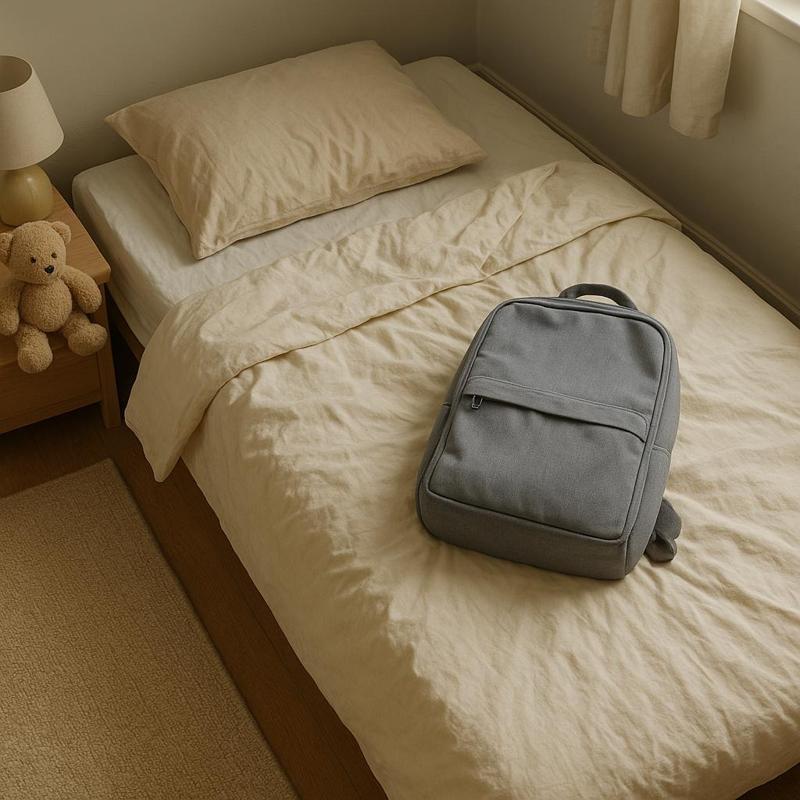
Measure three things: length, width, and thickness. Deep mattresses need sheets with generous pockets, while low-profile mattresses on bunk frames can make oversized sets look sloppy and become a safety concern near rails. If you are still deciding on frames, the Beds & Furniture collection shows how different bed styles shape what bedding will fit.
When a child is close to a size transition, consider whether to buy for the current bed or the next one.
4. Fabric and Weave Choices That Suit Children
Children are rough on textiles, so fiber and construction matter more than thread-count claims. A few principles hold up across most households.
- Breathable natural fibers: Cotton is a reliable everyday choice because it is soft, washable, and comfortable across seasons.
- Weave: Percale tends to feel crisp and cool, while sateen feels smoother and slightly warmer. Jersey knits feel casual and stretchy, which many children enjoy.
- Print method: Woven or well-set prints generally hold up better to repeated washing than heavy surface graphics, which can crack over time.
Check care labels before you commit. A set that needs special handling will likely end up unwashed or mistreated. For a house with allergies or sensitive skin, look for fabrics that can be laundered often and at suitable temperatures.
5. Sizing and Layering for Sleep Comfort
Layering is what makes one set work through the year. Instead of a single heavy comforter, think in modular pieces: fitted sheet, flat sheet or duvet cover, a lightweight blanket, and one optional warmer layer for winter.
This approach lets a child adjust independently, which many children appreciate. A light cotton blanket on a warm night and an added throw in colder months is simpler than swapping entire bedding sets. A well-chosen layer from the Blankets & Throws collection can serve as that seasonal extra without changing the base set.
For duvet covers, size matters for comfort and safety. An insert that is far larger than the bed will bunch and drape heavily, while one that is too small leaves gaps.
Pillows deserve attention too. Children generally need smaller, lower pillows than adults, and a pillow chosen for a growing neck should be firm enough to support without tilting the head.
6. Washing Routines That Keep Fabrics Sound
Good care extends the life of any set, and it is easier when you plan around it. Having two sets of sheets per bed means one can be washed while the other is in use, which reduces wear on both and removes the pressure of laundry-day timing.
- Wash new bedding first. Laundering before use removes finishing residues and softens the fabric.
- Sort by color and weight. Washing heavy blankets with lighter sheets can cause pilling and uneven drying.
- Use moderate settings. Follow the care label, and avoid overloading the machine so water and detergent can move through the fabric.
- Dry thoroughly. Damp bedding can develop odors, so make sure everything is fully dry before remaking the bed.
- Treat stains early. Spills and accidents are easier to handle when addressed promptly, following label guidance.
Rotating sets through the seasons also helps. Store the off-season layer clean and dry, in a breathable bag rather than sealed plastic, so it comes out fresh.
7. Common Mistakes and a Simple Planning Checklist
Most disappointments with kids' bedding trace back to a handful of avoidable habits.
- Buying by theme alone: A trend-driven set may be outgrown by the child's taste before the fabric wears out.
- Ignoring mattress depth: Sheets that do not fit deep or shallow mattresses cause constant re-tucking.
- Choosing only one heavy layer: This limits comfort across seasons and makes washing harder.
- Overcrowding the bed: Too many pillows and toys reduce sleep comfort and clutter the room.
- Skipping a backup set: Without a spare, one accident can leave the bed unusable.
Before you buy, run through this checklist: measure the mattress, decide the layer plan, confirm the care label, choose a base you will not tire of, and pick one or two easily changed accents. Those accents can extend to the rest of the room, where coordinated pieces from Kids' Room Décor can echo the bedding without needing to match it exactly.
If you would like to see how bedding, layers, and room accents fit together across a whole home, you can explore the range at CasaLuma for ideas that suit different ages and spaces.
8. Summary
Kids' bedding works best when it is chosen as a flexible system rather than a single themed set.